
Before a development project moves from idea to design, a feasibility analysis answers the foundational question: does this site work for this project? Property feasibility tools have changed how architects, developers, and builders answer that question — bringing structure, speed, and data to a process that used to rely on experience and manual research.
The Five Components of a Solid Feasibility Analysis
1. Market Analysis
What are comparable properties selling or renting for? What's the vacancy rate? Are there demographic trends that affect demand? Market analysis grounds financial projections in real conditions rather than optimistic assumptions.
2. Site Analysis
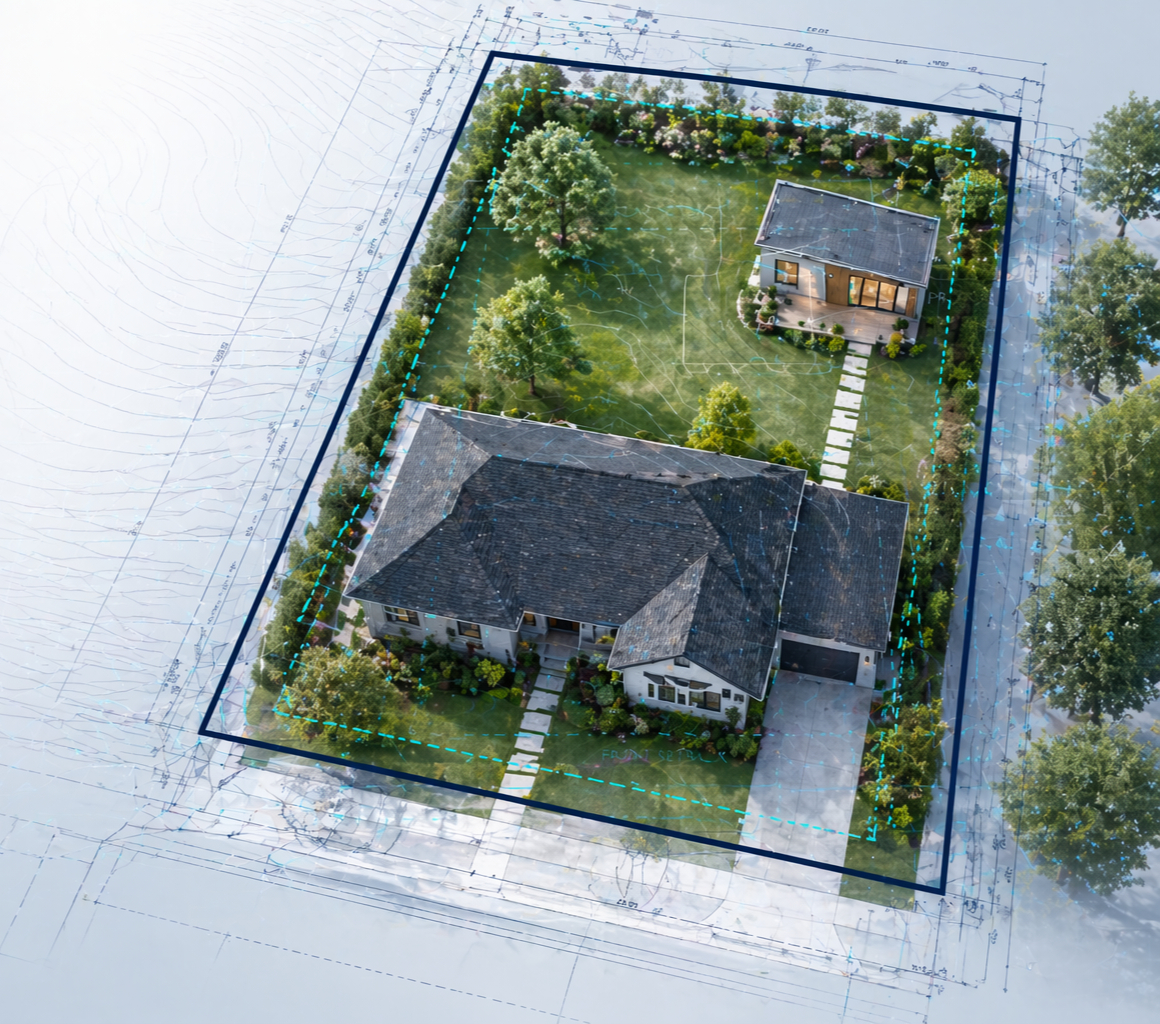
What does the physical property actually allow? Size, shape, slope, utility access, existing structures, and zoning constraints all shape what's buildable. An Assessor's Parcel Number (APN) lookup pulls the official parcel record — lot dimensions, zoning class, recorded easements — as a starting point.
3. Financial Analysis
Acquisition cost + construction cost + financing cost vs. projected revenue. Most feasibility models run multiple scenarios — best case, base case, downside — to understand the range of outcomes before committing to a site.
4. Risk Assessment
What could go wrong? Regulatory changes, permitting delays, construction cost overruns, and market softening all belong in a serious feasibility model. The risks that sink projects are usually the ones that weren't modeled.
5. Project Timeline
Permitting milestones, design phases, construction schedule, and absorption or leasing periods — all of these affect financing costs and therefore project feasibility. Optimistic timelines are a frequent source of feasibility errors.
How AI Property Feasibility Tools Change the Workflow
Traditional feasibility analysis required assembling data from multiple sources: county assessor portal, GIS map, zoning code lookup, utility district records, comparable sales databases. For a team doing a dozen feasibility studies simultaneously, that data-assembly step consumed significant time before any analysis could begin.
AI platforms like InQI automate the site data layer: enter an address or APN into the Site Plan generator, and the parcel boundaries, zoning class, setback rules, existing structure footprints, and site dimensions are assembled automatically. Codes.IQ layers in zoning compliance guidance. Estimate.IQ adds early-stage cost intelligence.
The result: teams spend their time on analysis and decisions rather than on data assembly.
IQ Agents handle the research. You handle the project.
Sign up for freePractical Examples
Urban infill development: A developer analyzed a 6,000 sf infill lot and found zoning limits on building height that reduced achievable density, high construction costs due to tight site access, and moderate rental demand in the submarket. The AI feasibility pass surfaced the height constraint immediately — saving the team from commissioning a full design before discovering the issue.
Suburban residential subdivision: An architect used feasibility modeling to estimate infrastructure costs, run lot-size optimization scenarios, and forecast sales prices across multiple configurations — ultimately recommending a lot layout that optimized density within the market's absorption capacity.
What to Look for in a Property Feasibility Tool
- Data quality — does it pull from authoritative parcel and zoning sources?
- Scenario modeling — can you run multiple financial scenarios quickly?
- Integration — does the site data connect to cost and code layers without manual re-entry?
- Output clarity — can the analysis be shared with partners, lenders, or clients without translation?
InQI is built around the integration requirement: site intelligence, code guidance, and cost estimates in a single platform, connected through the property record. See the full set of IQ Agents or compare plans.