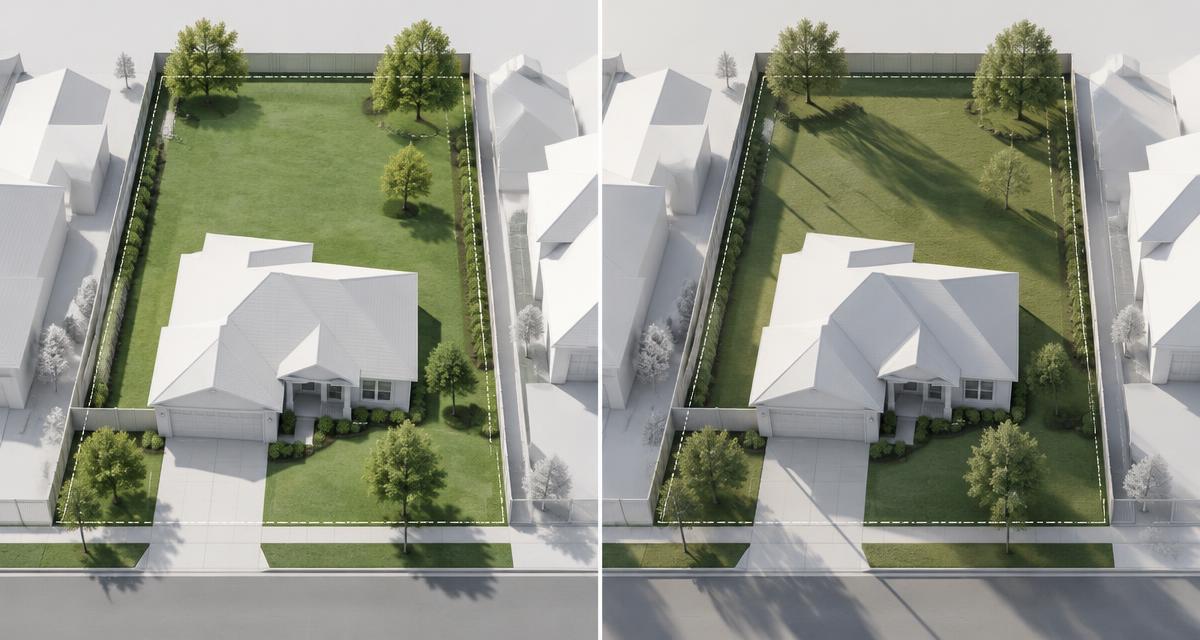
To map sun and shade in your yard, start with a site plan of your lot, mark what casts shade (the house, fences, trees, the neighbor's garage), then check the shadows in two seasons: summer, when the sun is high and shadows are short, and winter, when the sun is low and shadows can be several times longer. Sort each part of the yard into full sun (six or more hours of direct sun), part sun, part shade or shade, and place the patio, garden beds and play area to match. A scaled site plan from your address or Assessor's Parcel Number (APN), with a 3D view and a summer/winter sun toggle, lets you do the first pass from your couch.
Key takeaways
- Full sun usually means six or more hours of direct sun a day; shade means less than two.
- Winter shadows are much longer than summer ones. A spot that's sunny in June can sit in shade all December.
- Map sun and shade on a site plan of your lot, in both seasons, before you decide where anything goes.
Get a scaled site plan of your lot from your address or APN, with a 3D view built in.
Sign up for freeWhat do full sun, part sun, part shade and shade mean?
There's no official standard, but most garden references use hours of direct sun per day. These ranges are from the UC Master Gardeners of Placer County:
| Light category | Direct sun per day | Good for |
|---|---|---|
| Full sun | 6 or more hours | Vegetables, most flowering plants, a sunny patio |
| Part sun | About 4–6 hours | Many perennials and herbs |
| Part shade | About 2–4 hours | Plants that want protection from hot afternoon sun |
| Shade | Less than 2 hours | Shade plants, a cool seating spot in summer |
The hours don't have to be in a row. Four hours in the morning and a few more in the afternoon still count toward full sun. Afternoon sun is hotter than morning sun, so "part shade" plants usually do best with morning sun and afternoon shade.
Why does sun and shade in your yard change between summer and winter?
Because the sun's path changes. In summer it rises higher in the sky, so shadows are short. In winter it stays low, so the same house, fence or tree throws a much longer shadow, and it's lower for the whole day.
Here's roughly how long the noon shadow of a 6-foot fence is on flat ground, near the solstices:
| Latitude (example area) | Late June noon shadow | Late December noon shadow |
|---|---|---|
| About 34°N (Los Angeles area) | About 1 ft | About 9 ft |
| About 40°N (Denver / Philadelphia area) | About 2 ft | About 12 ft |
| About 45°N (Portland, OR / Minneapolis area) | About 2.5 ft | About 15 ft |
Those are noon numbers, the shortest shadows of the day. Morning and afternoon shadows are longer still. A two-story house can shade a strip of the yard in winter that's in full sun all summer. That's why a sun map made in one season can mislead you in the other.
Why map sun and shade on a site plan?
A site plan is a scaled drawing of your lot: the property line, the house, the garage, the driveway, and what's around them. It's the right base for a sun and shade map because shade depends on where things are and how far apart they are. "The patio gets shade from the house" is a guess. "The patio is 14 feet north of a two-story wall" is something you can check.
It's also where the project will end up. The same site plan you use to find the sunny spot is the one you'll sketch the patio or garden on, and often the one a designer, contractor or building department asks for. A site plan is scaled for planning, not a legal boundary survey; see site plan vs. property survey.
How to map sun and shade in your yard, step by step
- Get a site plan of your lot. Start from your address or APN so the house, fences and lot lines are to scale.
- Mark what casts shade. The house, garage, fences, walls, large trees and anything tall next door, on the south, east and west sides especially.
- Look at summer sun. Note where shade falls when the sun is high. This is your best case.
- Look at winter sun. Note where the long shadows reach. This is your worst case.
- Label each area. Full sun, part sun, part shade or shade, using the hours in the table above.
- Check it in person. On a clear day, note when each area gets direct sun in the morning, at noon and in the afternoon. Repeat in another season if you can.
- Place the project. Sketch the patio, garden beds or play area on the site plan where the light matches what you want.
Example: where to put a patio and a vegetable bed
Here's how it can play out (illustrative example):
- The question. Over Thanksgiving, a family wants a patio and a raised vegetable bed in the backyard.
- The site plan. They build a site plan of their lot from their address and open the 3D view.
- Summer vs. winter. In summer sun, the whole backyard looks bright. In winter sun, the two-story house shades the strip closest to the back door, and the far corner stays in sun.
- The decision. The vegetable bed goes in the far corner, where it gets full sun. The patio goes by the back door, where summer afternoon shade is a plus, and they sketch both on the plan before calling anyone.
See your lot in 3D and compare summer and winter shade before you plan.
Sign up for freeWhere should you put a patio, garden or play area?
- Vegetable garden: full sun, six or more hours. Check it in your shortest season if you grow year-round.
- Patio or seating area: depends on your climate. In hot summers, afternoon shade from the house or a tree is a gift. In cool climates, a sunny south- or west-facing spot gets more use.
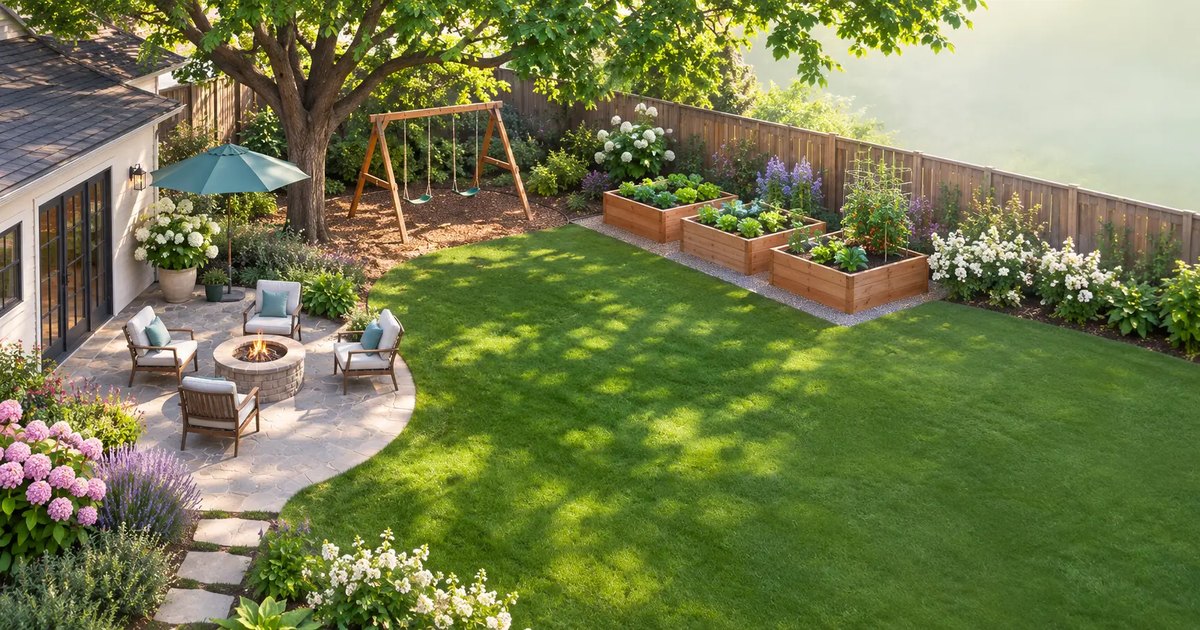
- Play area: some shade in summer afternoons keeps slides and surfaces cooler. See kid-friendly backyard ideas.
- Lawn: most lawn grasses do best in sun; deep shade is often better planted with shade-tolerant groundcover.
- New trees: think about where their shade will fall in 10 years, on your yard and your neighbor's.
Also check the rules: how close a patio cover, shed or play structure can sit to the property line depends on local setbacks. See how close to the property line you can build.
How can you map sun and shade with InQI?
InQI (inqi.ai) is an AI platform for homeowners and AEC professionals that starts every project from an address or APN. The Generative Site Plan gives you a scaled site plan of your lot with parcel boundaries, lot dimensions, setback lines, building footprints and topography, plus:
- A 3D view, built in. Walk through your site in three dimensions.
- A summer/winter sun toggle. Compare seasonal shadows on your own lot before you commit to a design.
- Room to sketch. Draw the patio, garden or play area on your real property.
- Files to share. Export the site plan as a PDF, DXF or SVG for your designer or contractor.
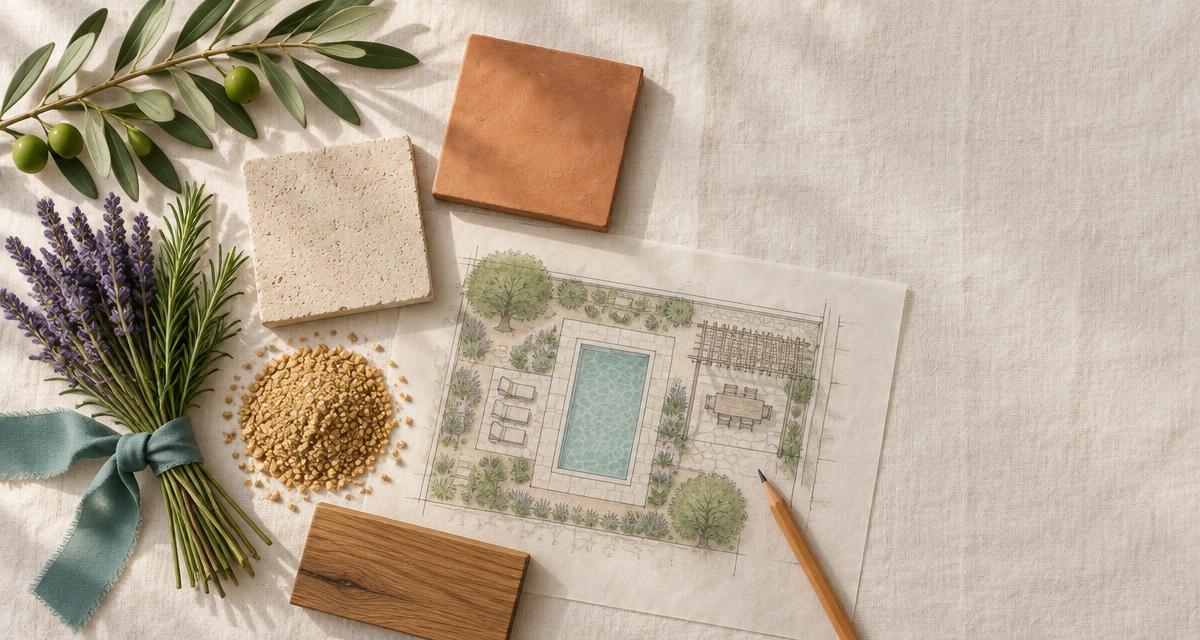
Want to see the finished yard? The 2D Render Generation Impresario turns your site plan into a landscape image in the style you choose; see Mediterranean backyard design for an example.
Frequently asked questions
Plan for both seasons. Start with the site plan.
Enter your address or APN, get a scaled site plan of your lot, and check where the summer and winter shade falls before anything gets built.
Get your site plan and see your yard's sun and shade in 3D.
Sign up for free